Celiac Disease Symptoms and Early Warning Signs in Adults and Children

 |
Published September 26, 2026 Author: Staci Leibson – Life Coach at The Celiac Shift |
What Are the Early Warning Signs of Celiac Disease?
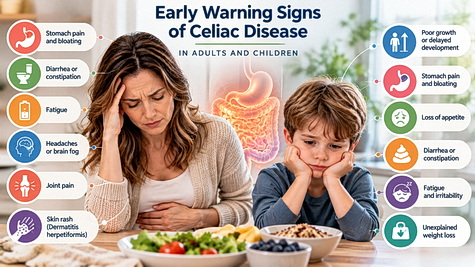
Common early warning signs of celiac disease in adults and children can include digestive symptoms, fatigue, headaches, skin problems, changes in appetite, and growth or weight concerns (AI image – does not depict real people)
Early warning signs of celiac disease can include ongoing bloating, diarrhea or constipation, belly pain, fatigue, anemia, mouth ulcers, and an itchy, blistering rash; children may grow slowly or lose weight. The Celiac Shift reminds families to talk with a doctor before going gluten-free, because the diet can affect test results.
Digestive Symptoms
Digestive symptoms of celiac disease can include bloating, gas, chronic diarrhea, constipation, nausea or vomiting, belly pain, and loose, greasy, bulky, bad-smelling stools. Because these same signs also show up with problems like irritable bowel syndrome and lactose intolerance, doctors do not diagnose celiac disease from symptoms alone, as the National Institutes of Health explains in its overview of how celiac disease is diagnosed.
Symptoms Beyond the Digestive System
Celiac disease can also cause symptoms in other parts of the body, such as tiredness, headaches, joint or bone pain, depression or anxiety, balance problems, numbness or tingling in the hands or feet, and fertility or menstrual problems. Most people have one or more symptoms before they are diagnosed, and symptoms can come and go, so the full symptom list from the National Institute of Diabetes and Digestive and Kidney Diseases (NIDDK) is worth reading if several of these sound familiar.
Signs a Doctor or Dentist May Notice
Some warning signs show up at a checkup rather than as something you feel, including anemia or unexplained low iron, vitamin B12, or folate on a blood test, and tooth enamel defects or canker sores that a dentist may notice. UK clinical guidelines from NICE list unexplained iron, vitamin B12, or folate deficiency and severe or persistent mouth ulcers among the reasons to offer celiac blood testing.
Signs in Babies and Children
Digestive symptoms are more common in children than in adults, and because growing bodies need nutrients, celiac disease in children can also show up as slow growth or short height, poor weight gain or weight loss, delayed puberty, damaged enamel on permanent teeth, and mood changes such as irritability. Parents can compare what they see with the childhood symptom list from NIDDK, and the Celiac in Children and Teens section of our Complete Guide to Celiac Disease looks at how the condition affects growth, energy, and school life.
An Itchy, Blistering Rash Called Dermatitis Herpetiformis
Dermatitis herpetiformis is an itchy, blistering skin rash tied to celiac disease that usually appears on the elbows, knees, buttocks, back, or scalp, and some people have the rash with no other symptoms. It is more common in adults than in children with untreated celiac disease, and NIDDK notes that a doctor may take a small skin sample, called a skin biopsy, from a rash that could be dermatitis herpetiformis.
Celiac Disease With No Obvious Symptoms
Some people with celiac disease have no symptoms at all, yet untreated celiac disease can still lead to complications over time. The Celiac Disease Foundation explains that how strong symptoms feel does not necessarily reflect how much damage is happening in the intestine.
Family Members and Other Higher Risk Groups
You are more likely to develop celiac disease if someone in your family has it, and it is also more common in people with Down syndrome, Turner syndrome, or Williams syndrome. NIDDK advises blood relatives of people with celiac disease and people with type 1 diabetes to ask their doctor whether they should be tested, and UK guidelines from NICE go further by recommending that testing be offered to all first-degree relatives, meaning parents, siblings, and children.
When Symptoms Come Back After a Diagnosis
Symptoms typically improve on a gluten-free diet but may come back after eating even small amounts of gluten, and the dermatitis herpetiformis rash can return the same way. If familiar symptoms reappear, tell your doctor and look for hidden gluten at home with our guide on how to prevent gluten cross-contact in a shared kitchen.
What to Do If You Notice These Signs
If you notice these signs in yourself or your child, keep eating gluten and talk with a doctor, because doctors do not recommend starting a gluten-free diet before testing, and the diet can affect test results. The Diagnosis and Testing section of our Complete Guide to Celiac Disease outlines how celiac testing works.
Support After a Diagnosis
Celiac coaching is non-medical support that helps individuals and families turn a confirmed diagnosis into safe daily routines at home, at school, and when eating out. It does not replace your gastroenterologist or dietitian, and you can learn more about how celiac coaching works or book a free consultation with Staci Leibson.
Frequently Asked Questions
Can celiac disease be diagnosed in adulthood?
Yes. Celiac disease affects both children and adults, and some people are first diagnosed as children while others are not diagnosed until adulthood.
Is celiac disease the same as gluten sensitivity or a wheat allergy?
No. Gluten sensitivity can cause similar symptoms, such as belly pain and tiredness, but it does not damage the small intestine. A wheat allergy is a food allergy that can cause different symptoms, such as itchy eyes or trouble breathing, and it also does not cause long-term damage to the small intestine.
H3 Can a baby be tested for celiac disease before eating gluten?
UK clinical guidelines advise against celiac blood testing in infants before gluten has been introduced into the diet. Ask your pediatrician about the right timing if celiac disease runs in your family.
How common is celiac disease?
Experts estimate that about 1 percent of people worldwide have celiac disease, or about 2 million people in the United States, and many people who have it have not been diagnosed.
This page is general education written by a non-medical celiac coach and built from public health and clinical guideline sources listed at the end. It cannot diagnose celiac disease or replace care from a doctor.